FROM 18 Oct
Andrei Rublev
Andrei Tarkovsky
Andrei Tarkovsky
Andrei Tarkovsky's acclaimed epic about the life, times and afflictions of 15th century Russian iconographer St. Andrei Rublev.
Collaborators, Perpetrators, Bystanders and Victims
 This talk by Professor Maggie Andrews and Sonia Smith interrogates the representations of women in feature films about the Holocaust. An illustrated talk to mark Holocaust Memorial Day.
Film Talk
This talk by Professor Maggie Andrews and Sonia Smith interrogates the representations of women in feature films about the Holocaust. An illustrated talk to mark Holocaust Memorial Day.
Film Talk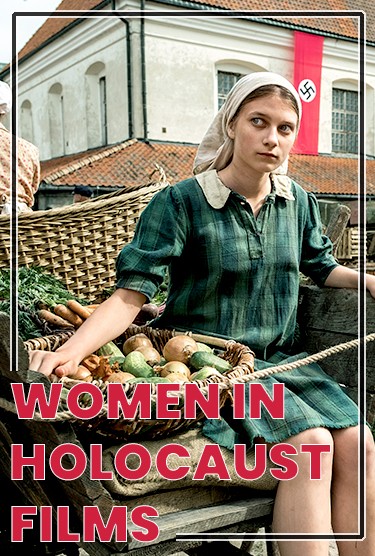
There are intrinsic problems for feature films seeking to represent the Holocaust: tensions arise if films attempt to both educate and engage, or even entertain their audiences.
Nevertheless, whilst acknowledging these problems, this talk by Professor Maggie Andrews and Sonia Smith seeks to interrogate how films have chosen to portray women as collaborators, perpetrators, bystanders or victims of the Holocaust.
Some films, such as ‘Frieda’ (1947), ‘The Nasty Girl’ (1990) and ‘Lore’ (2012), have encouraged audiences to consider women’s complicity in the genocide. Others, such as ‘The Passenger’ (1963) suggest women were either monstrous fascists or powerless victims of an oppressive regime.
However, more nuanced renderings of ordinary women’s complex relationship with the Holocaust can be found in ‘Aimee and Jaguar’ (1999), ‘Downfall’ (2004), ‘Zone of Interest’ (2023) and ‘The Tasters’ (2025) which seek to encourage reappraisals of women’s complex personal, ethical and moral choices when living in the Third Reich.
.
.
.

Eleanor the Great

The Tasters

The Last Spy

Women in Holocaust Films Talk